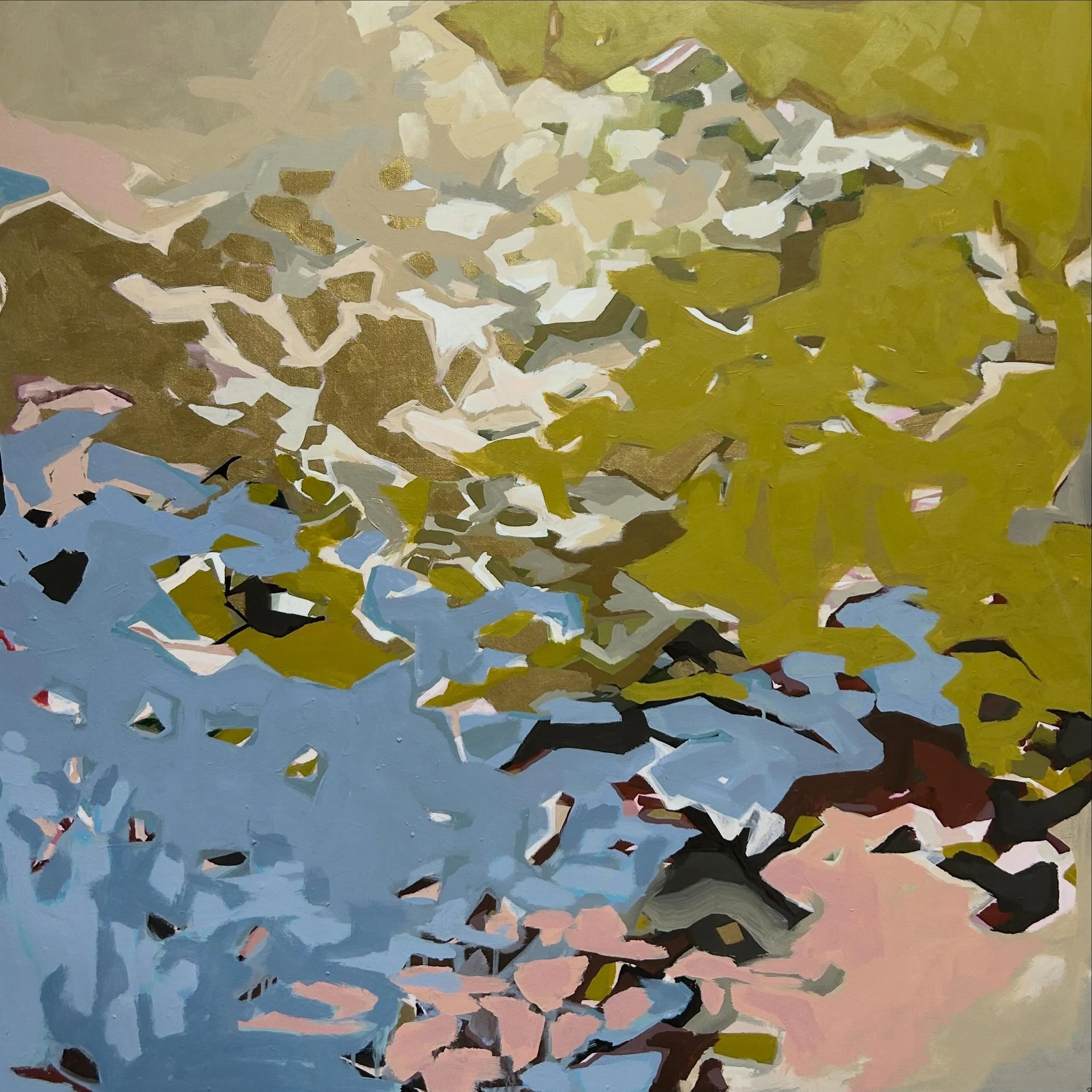
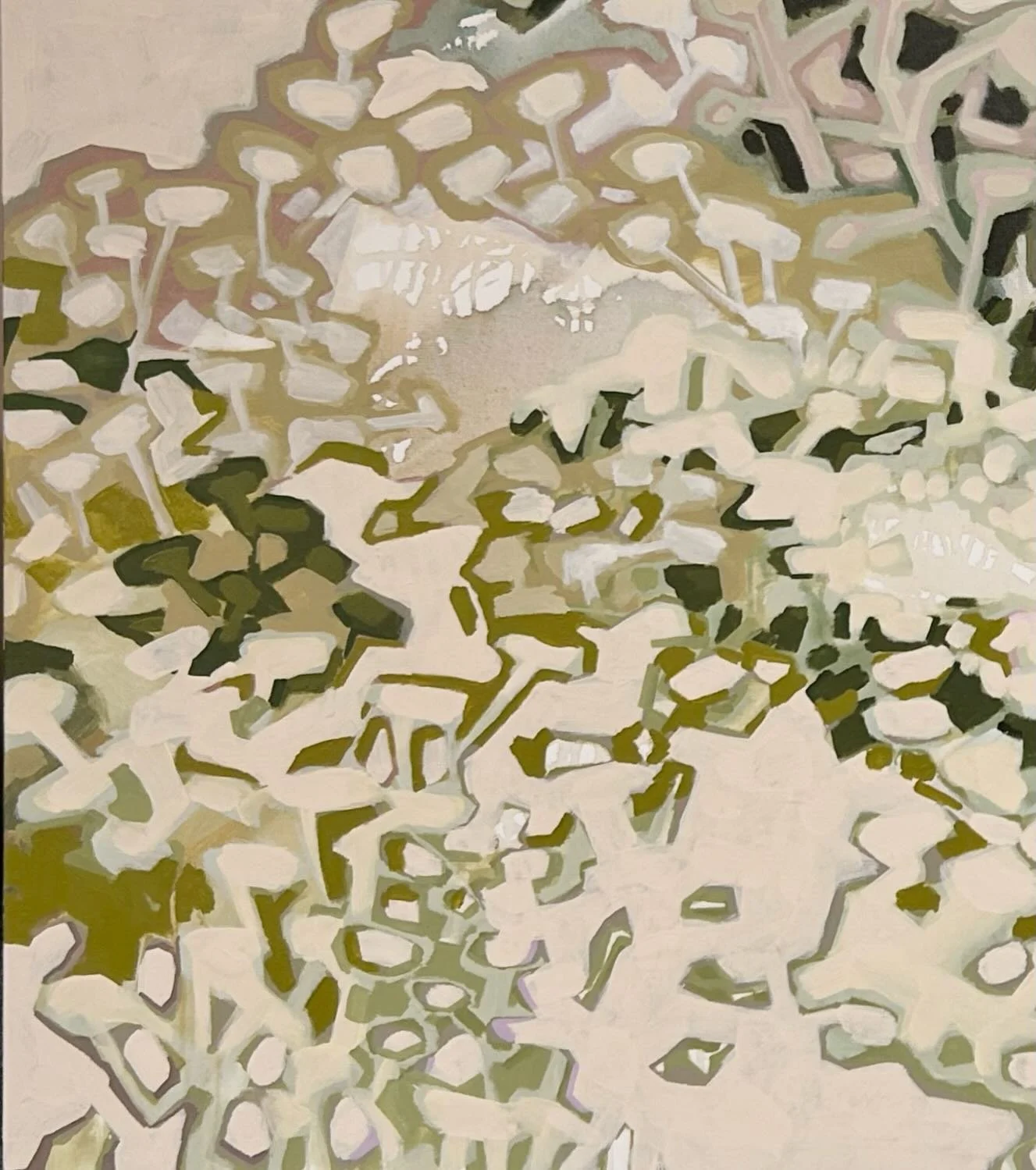
Irene Wood is an American born, half Chinese multimedia artist based in Seattle, WA. In her paintings, the landscape becomes an abstract terrain through which time, memory, and cultural duality intersect. Influenced by the spirit and spatial sensibility of ancient Chinese brush paintings, what may first appear as abstract patterning reveals itself as a layered language of topography and psyche where micro meets macro. These forms resist mapping in any traditional sense in an effort to convey the autonomy of lived experience. There is a deliberate dissonance at play: between the ancient and the contemporary, the remembered and the imagined, the inherited and the self-forged. Irene anchors her approach in the philosophy of traditional Chinese aesthetics, echoing shan shui (mountain-water) compositions that coincide in the rhythmic undulations of color and void. Ultimately, these externals simulations are mirrors of internal geographies that invite the viewer to lose orientation and, in doing so, discover the subtle terrain of a fragmented and fluid identity.
Pricing inquiries, commissions, collaborations, galleries, don’t hesitate to leave your information here or email directly at irene@irenewood.com

Drought 36" x 48" on canvas Contact for pricing
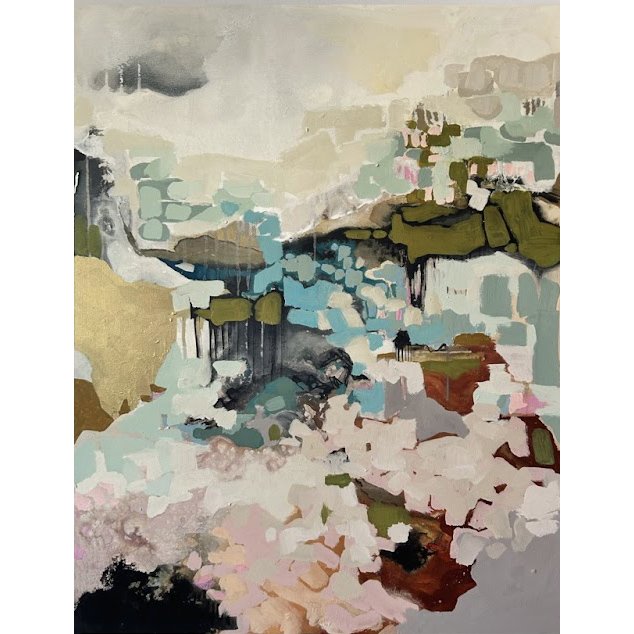
Tephra 30" x 40" on canvas Contact for pricing

The Garden 18" x 24" on canvas - SOLD

Last Night 30"x40" on canvas - SOLD

Jungle 18" x 24" on canvas - SOLD
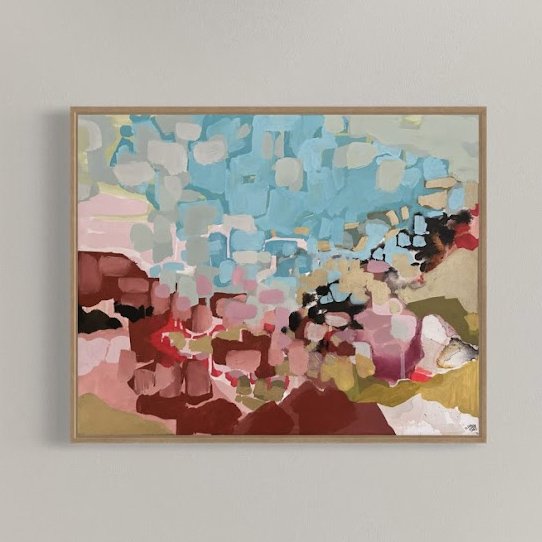
Electric Fields 16" x 20" canvas mounted in a custom maple frame - SOLD
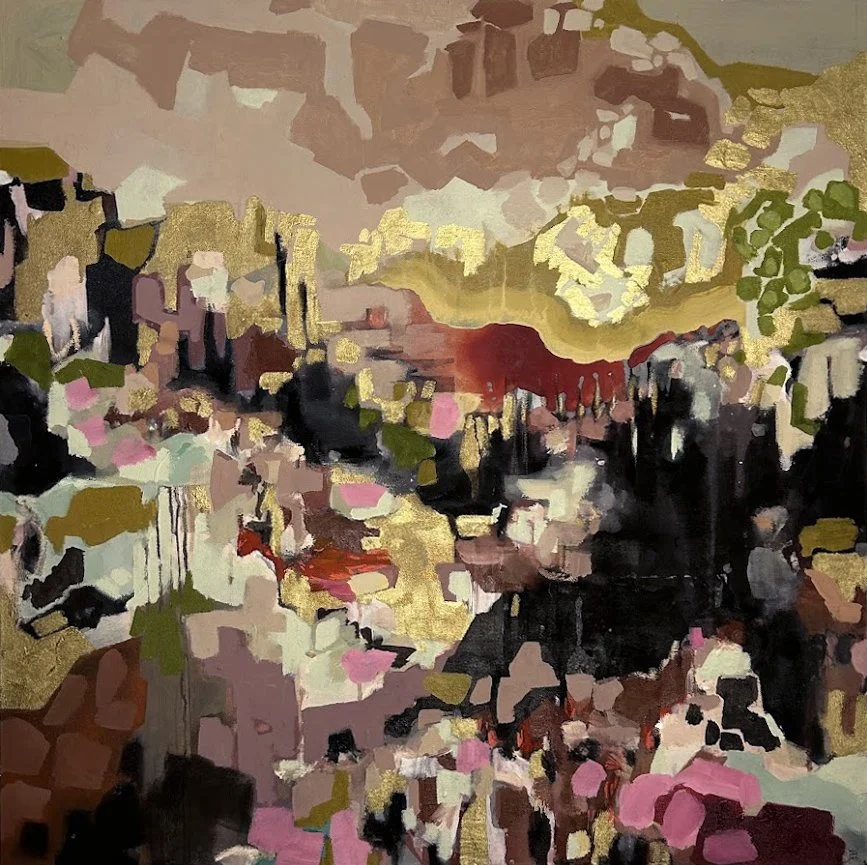
A Billion Years 36" x 36" on canvas Contact for pricing
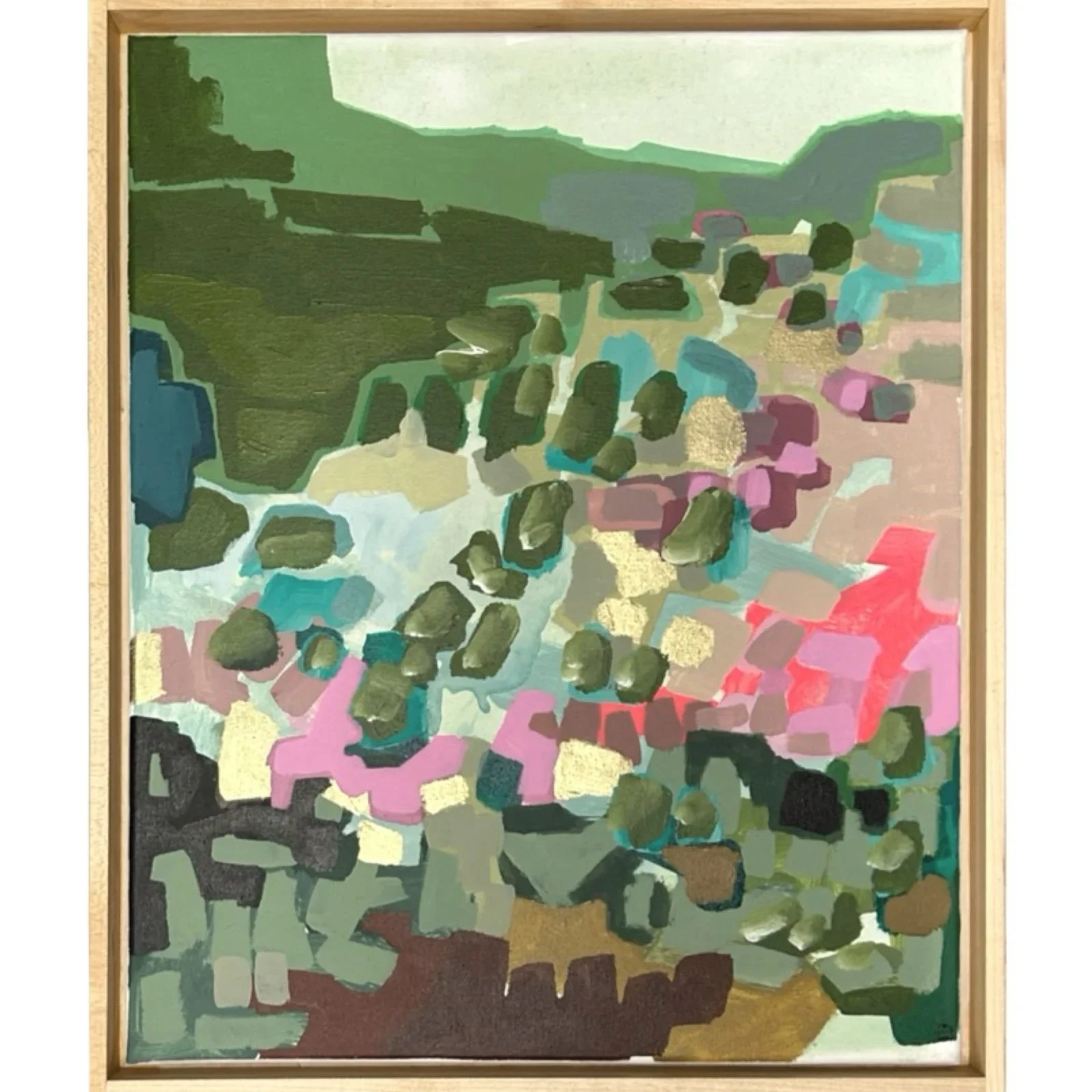
Mineralscape 16" x 20" canvas mounted in a custom maple frame
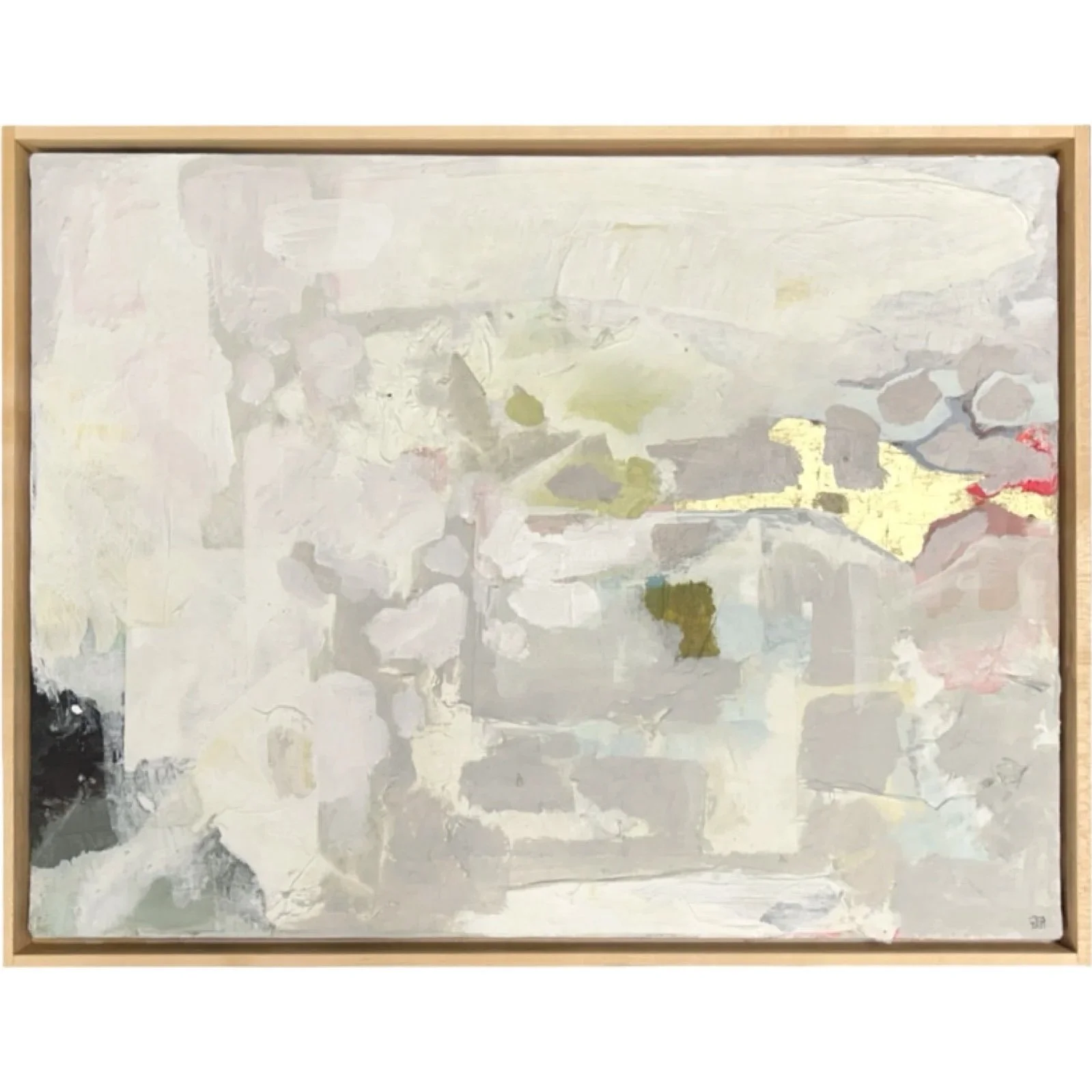
Shadowlands 18" x 24" collage on canvas mounted in a custom maple frame
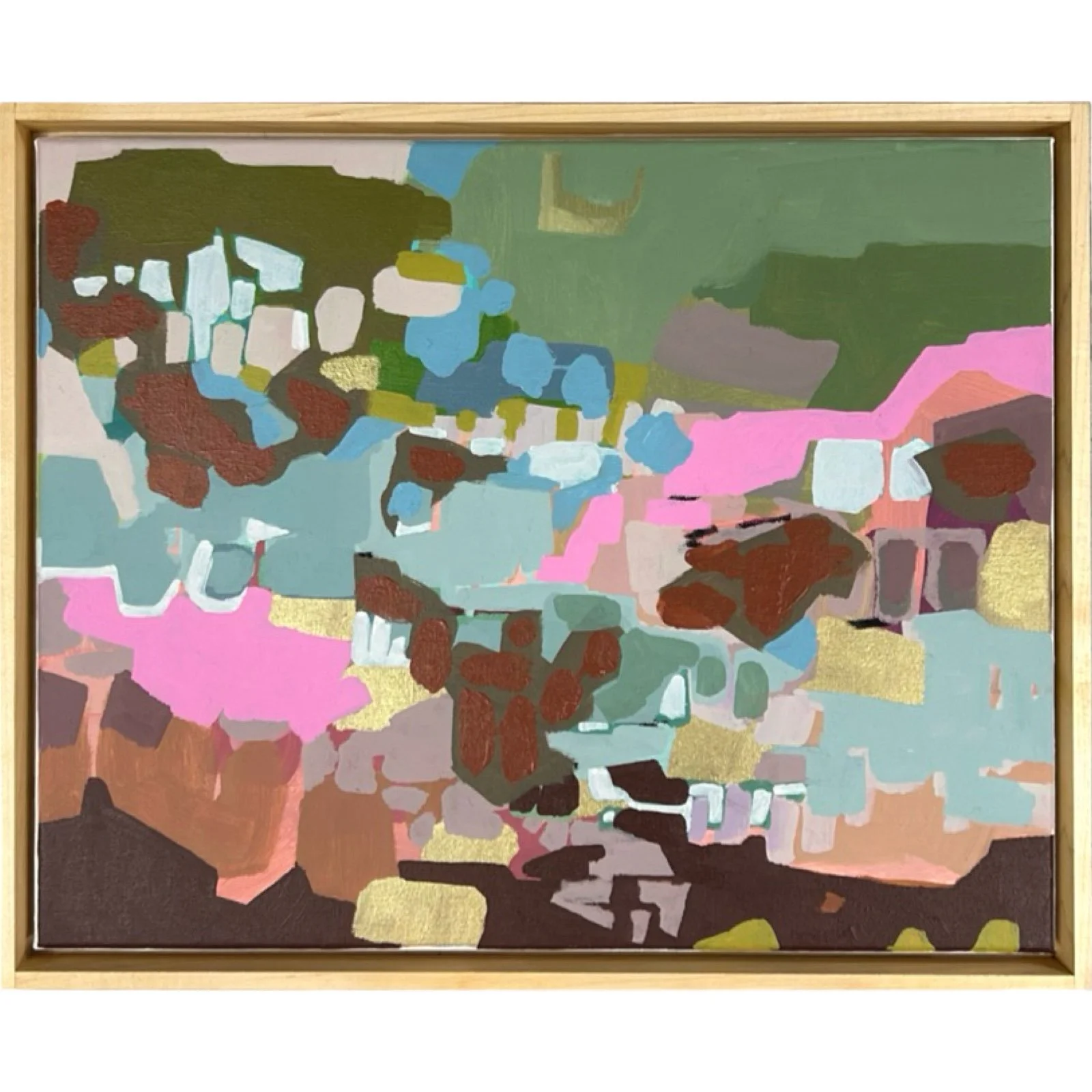
Electric Plains II 16" x 20" canvas mounted in a custom maple frame
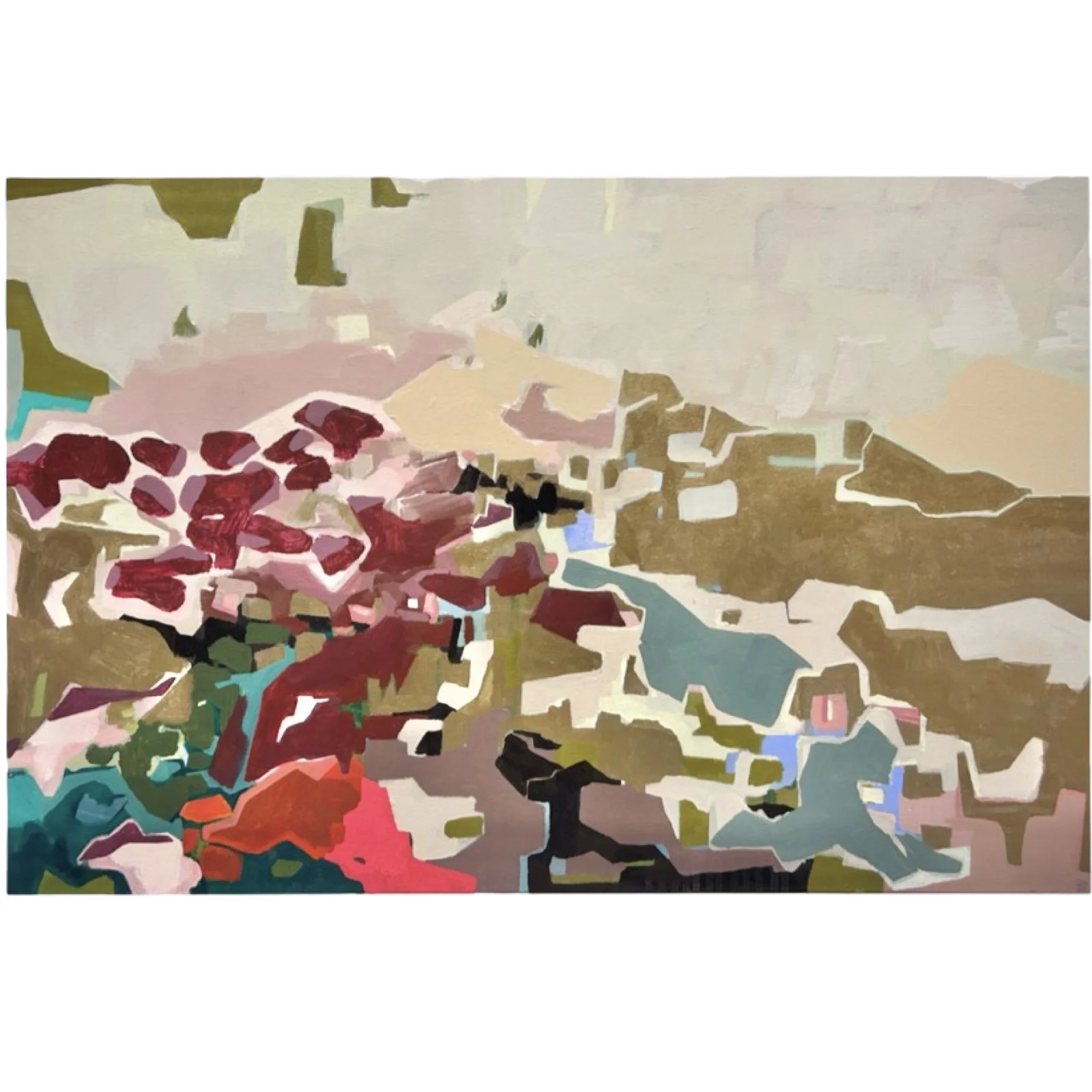
To the North of Everywhere 24" x 36" canvas
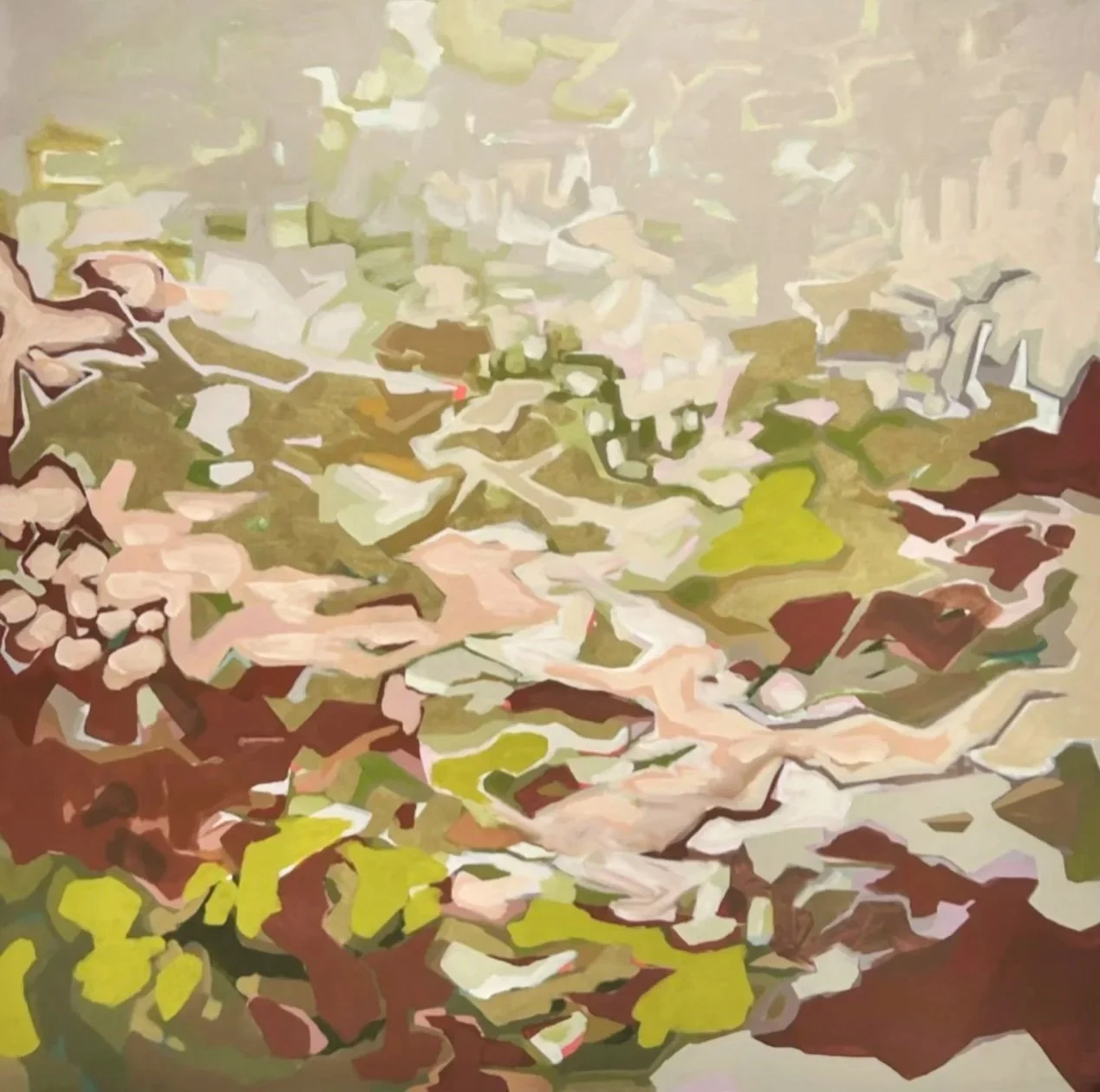
Where the Land Meets the Sky 48" x 48" canvas

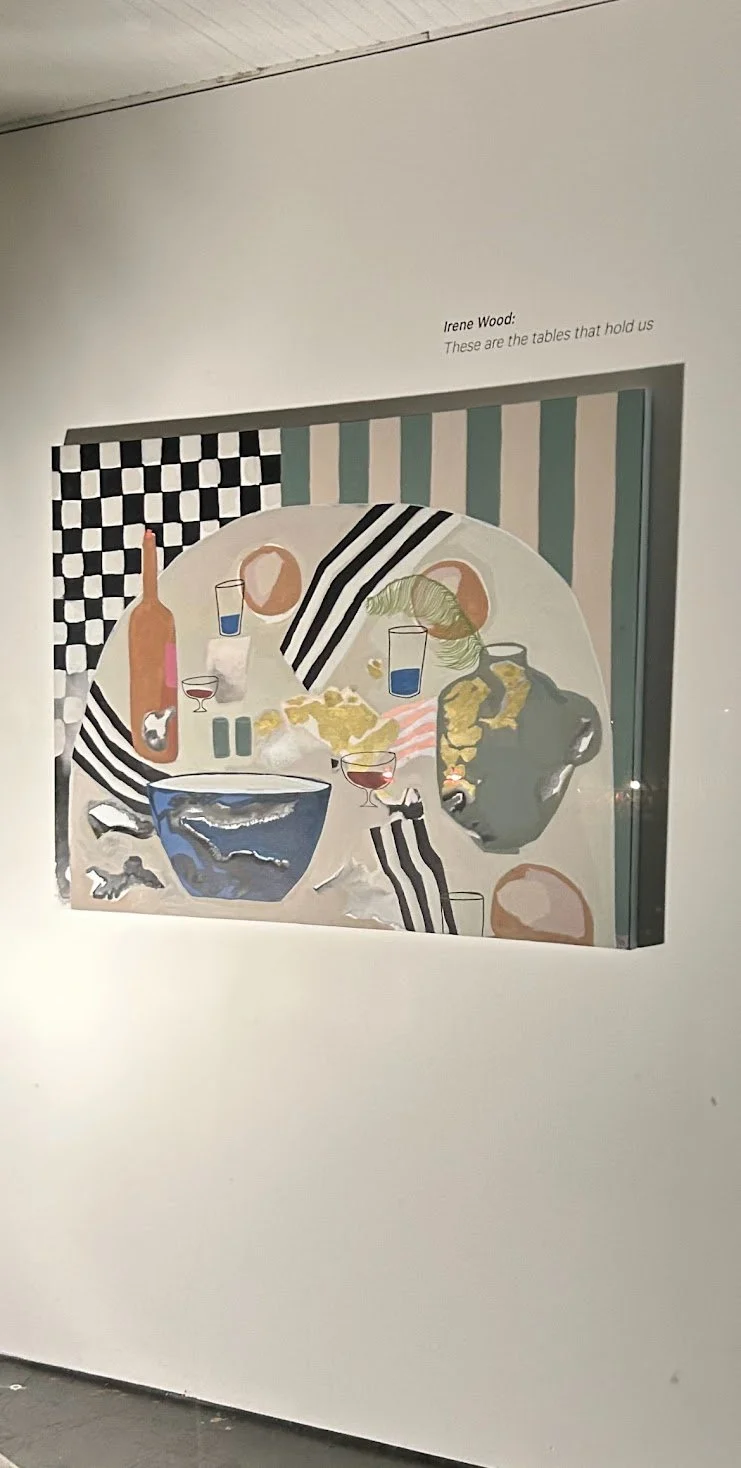
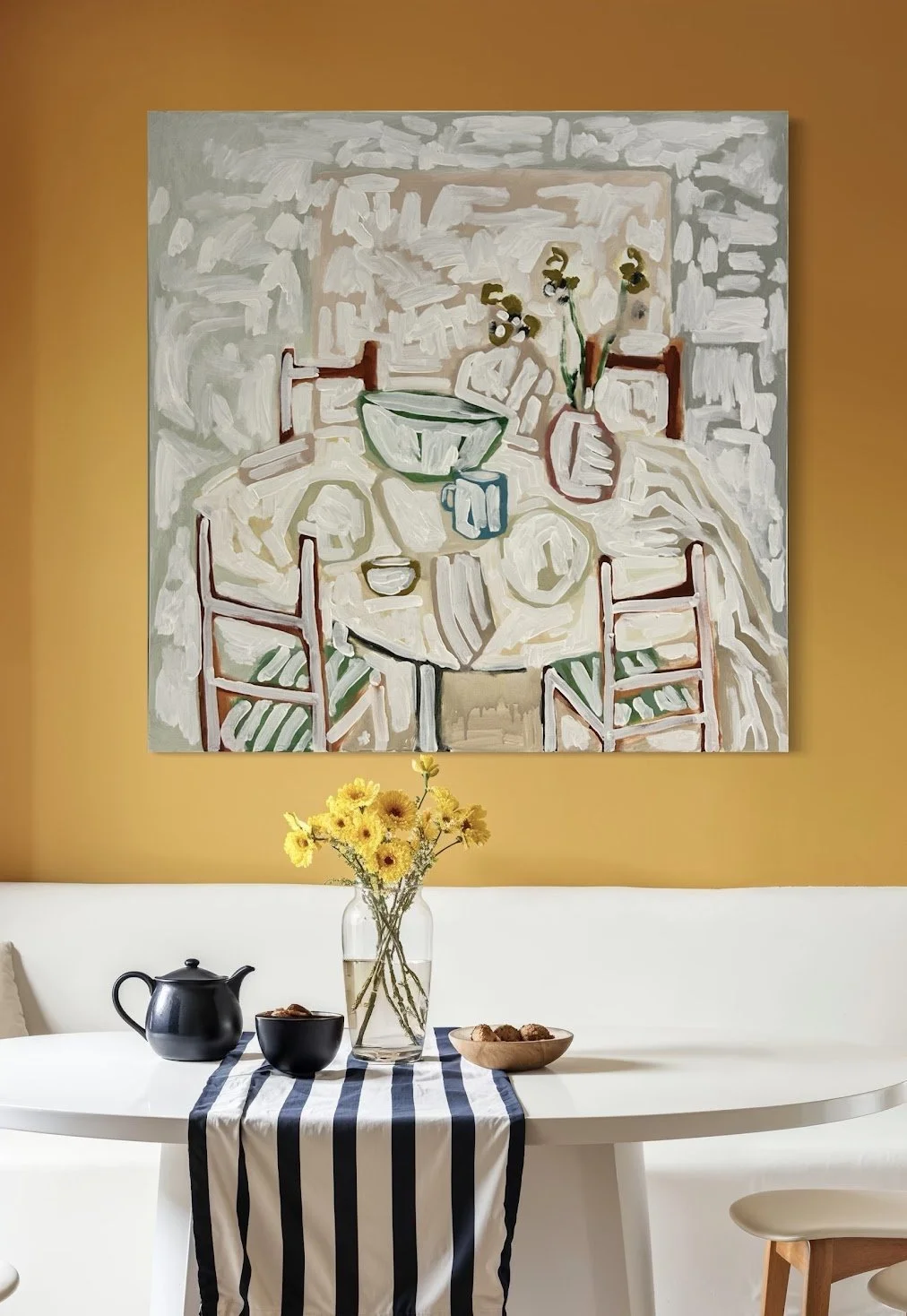
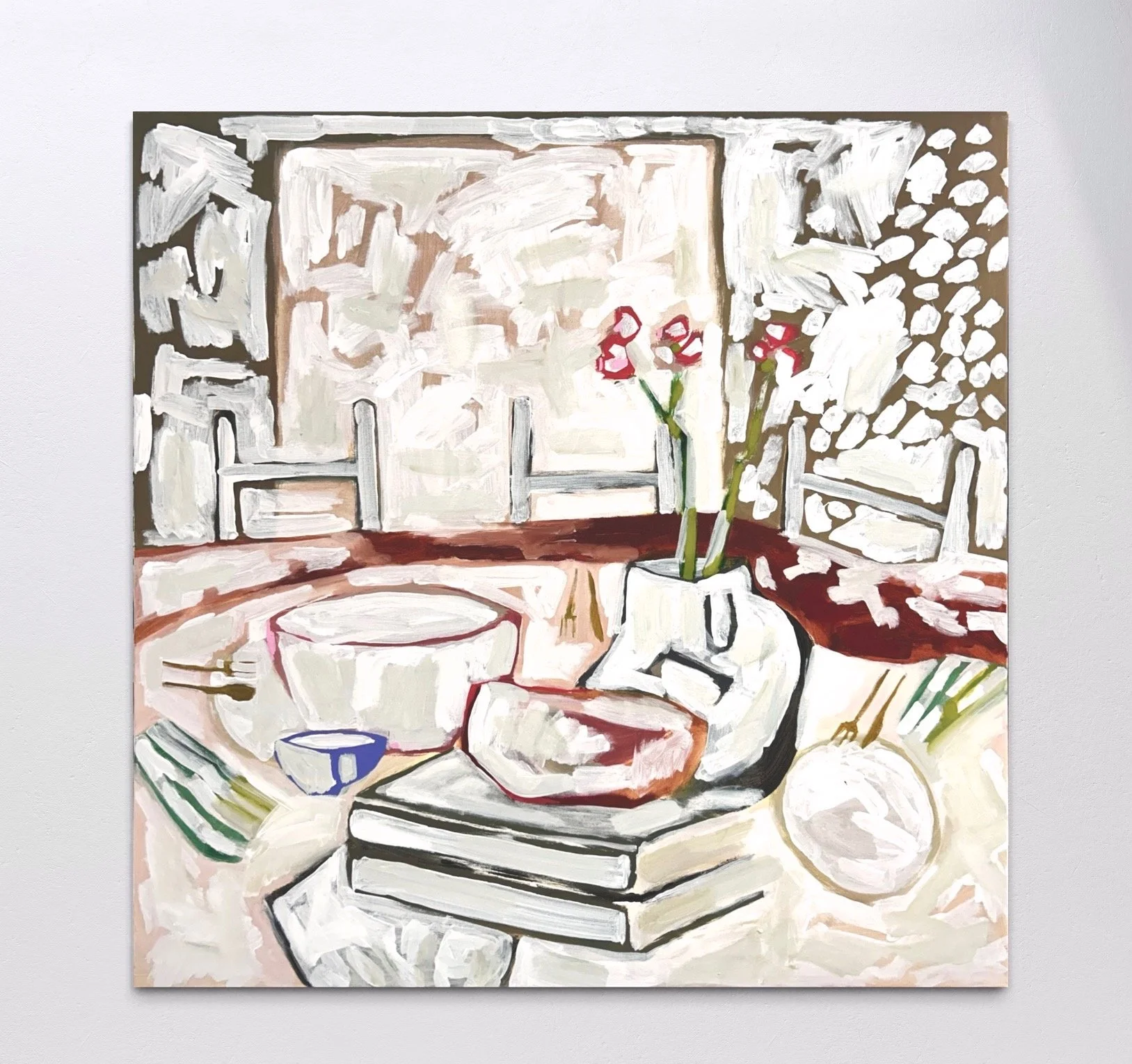
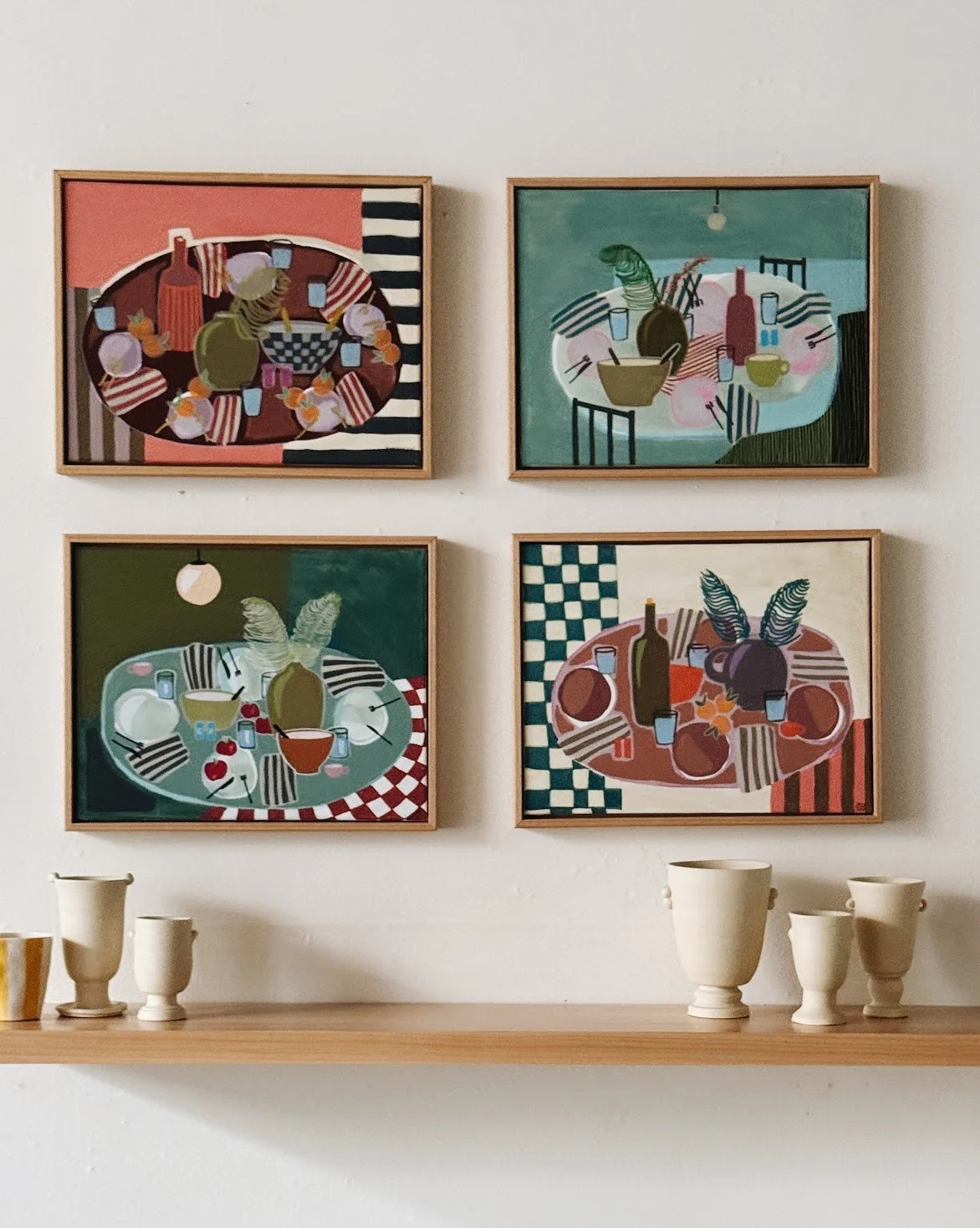
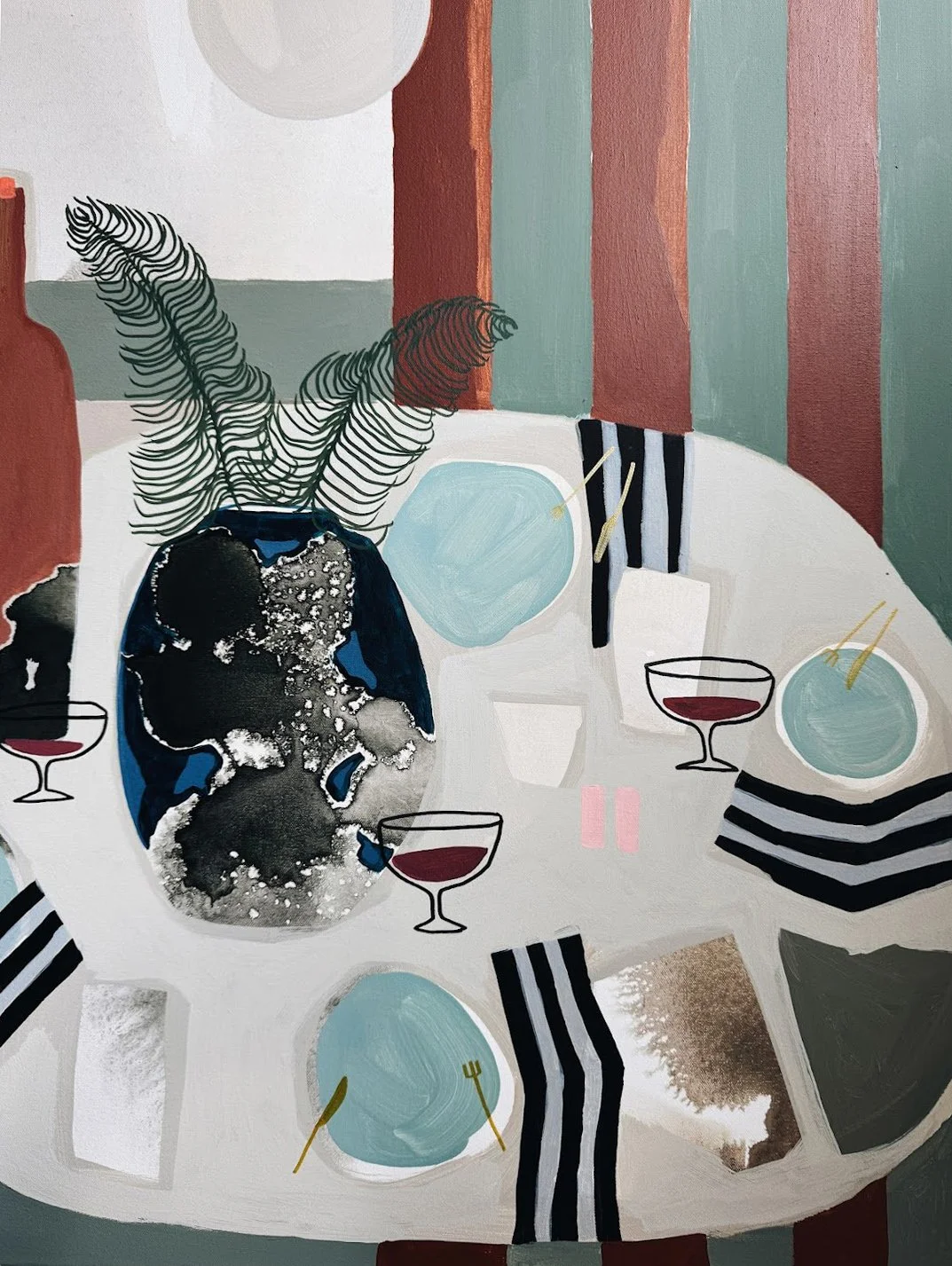
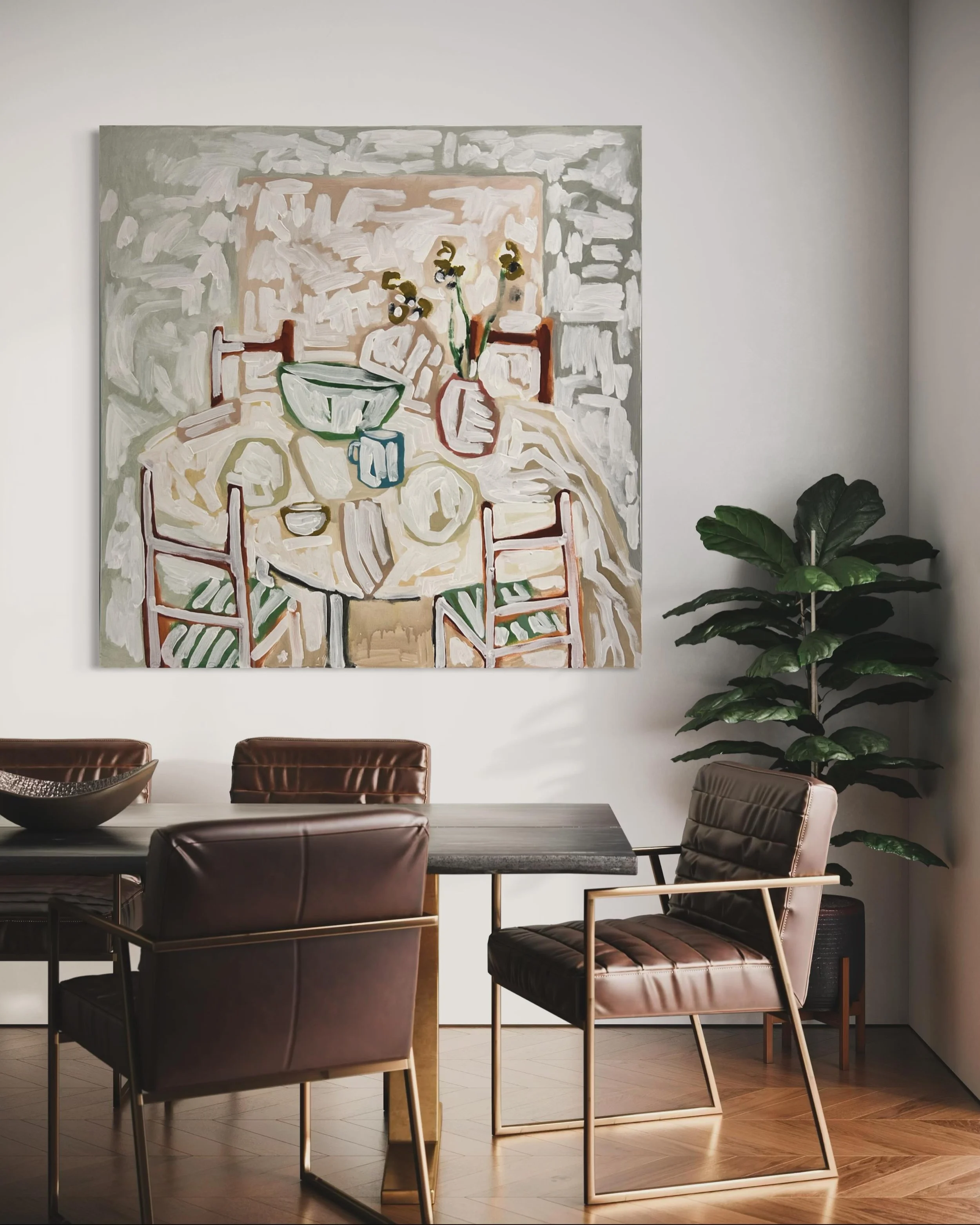
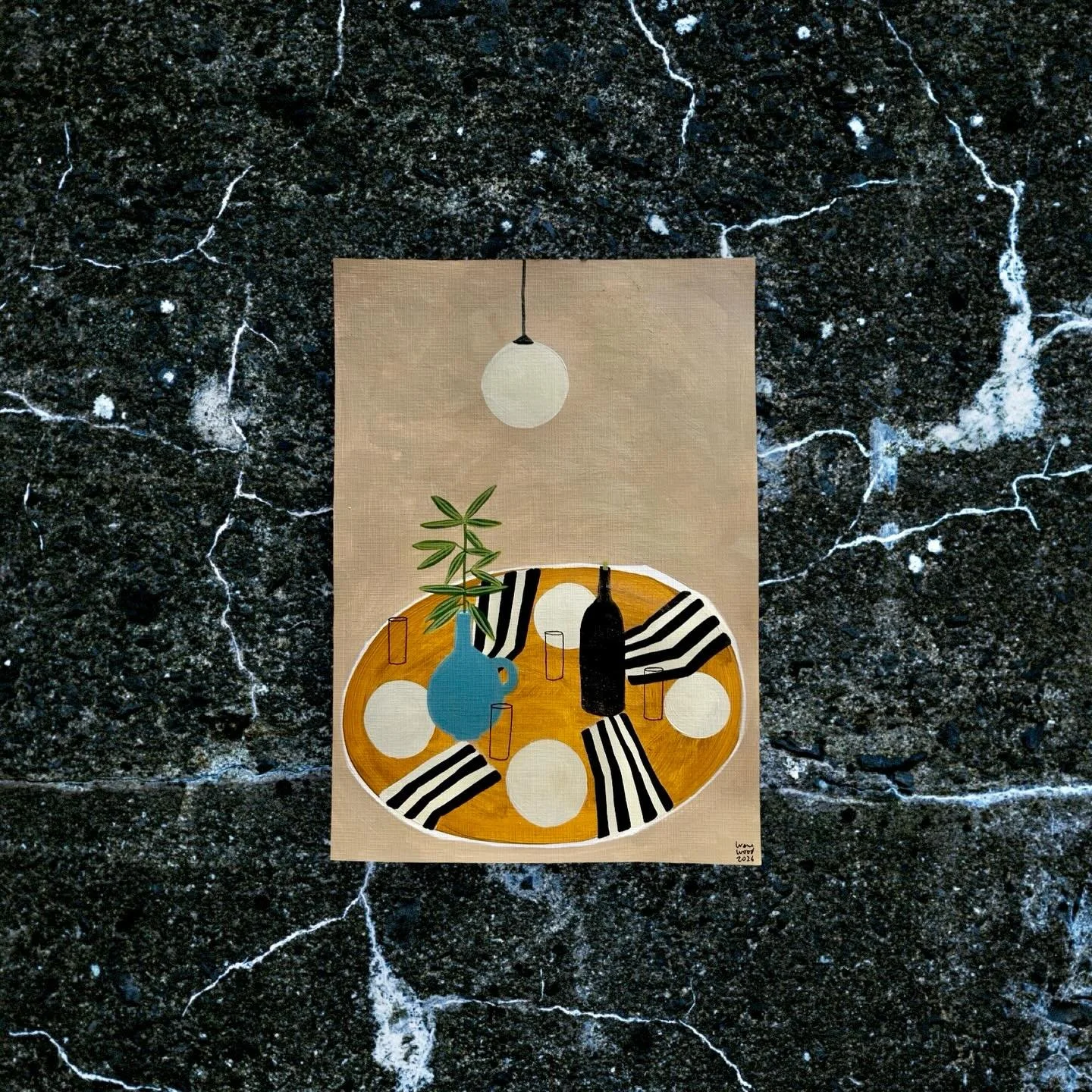
KITCHEN TABLE SERIES
Inspired by Joy Harjo’s poem Perhaps the World Ends Here, this series is a meditation on the quiet omnipresence of the kitchen table. In Harjo’s words, the table is where “we laugh, cry, argue, pray, give birth, bury our dead.” It feels ordinary here (if we’re so lucky), yet somehow simultaneously grand. This series reimagines the table as sacred ground, a space of inheritance, ritual, and everyday tenderness. This is a place where life’s joys, conflicts, and farewells unfold. It asks: What do we pass on here? Who is missing? Who is still present? And what remains, even when the plates are cleared.
It’s an interesting process shifting from the vastness of land formations to the focused of the kitchen table. In many ways, it’s its own kind of landscape. This too is a place where memory, stories, events accumulate and the layers of paint hold traces of the past. The objects on the table hold the echoes of family, friends, culture, migration, belonging and identity. Both bodies of work ask how personal and collective histories imprint themselves onto space. This shift from landforms to the table is not so much a change in subject as it is a change in scale.